

Sara Shahverdi — a divorced, motorcycle-riding former midwife — is an unlikely leader in her conservative northwestern Iranian village. As the first woman ever elected to the local council, she’s determined to break the cycle of empty promises and complacency passed down by the men who came before her. Fierce and unapologetic, Sara pushes for bold reforms, fighting her most difficult battles on behalf of the village’s girls and women. From teaching teenage girls to ride motorcycles to challenging child marriage to advocating for female land ownership, she openly defies patriarchal norms. But when her efforts spark backlash and accusations about her motives, Sara must confront not only her critics — but also her own sense of identity.
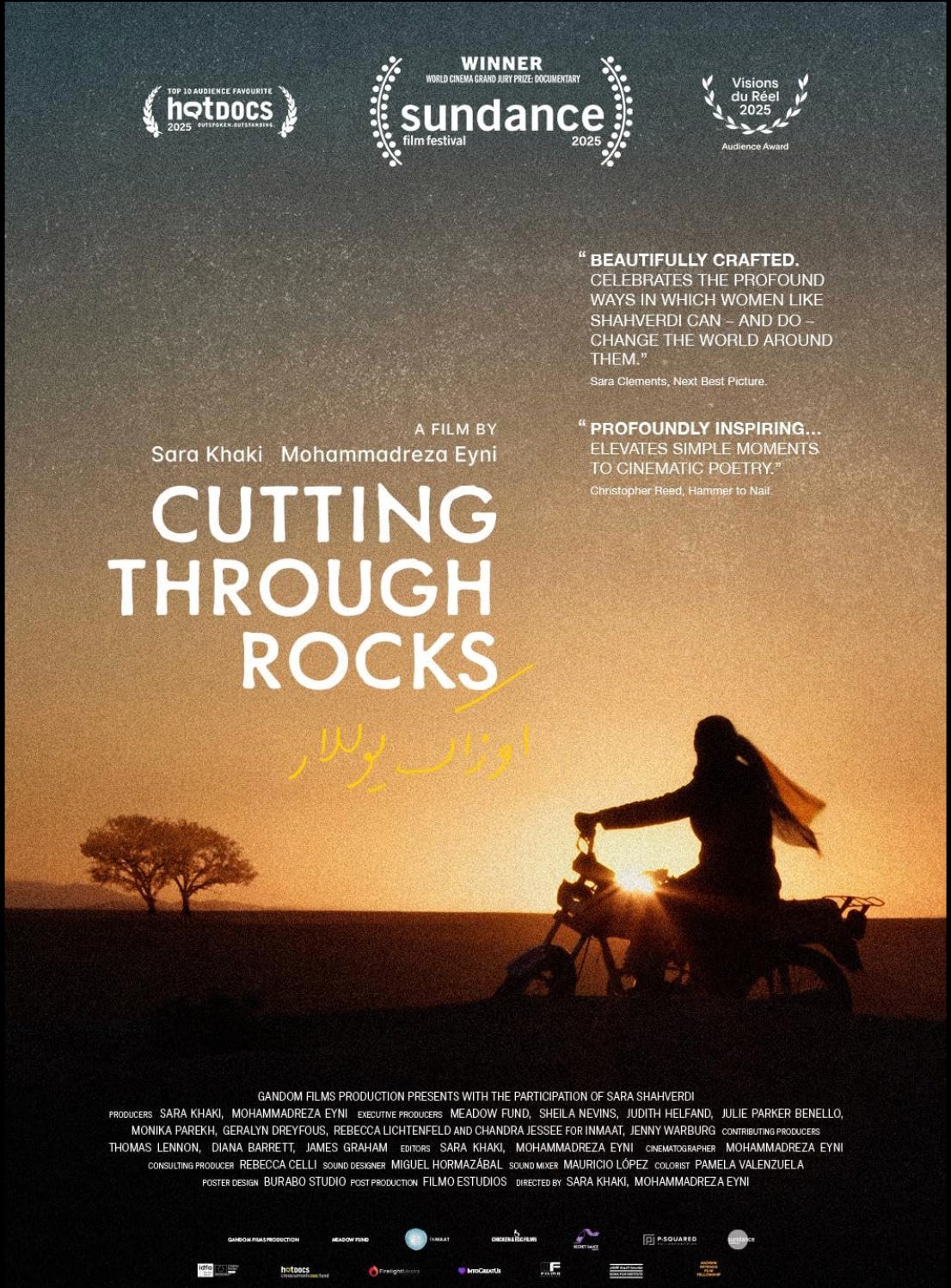
**2025 Sundance FF - Grand Jury Prize - World Cinema Documentary**
**2025 Woodstock FF - Maverick Award for Best Documentary**
**2025 New Zealand FF - Best Documentary + Audience Award**
**2025 Giffoni FF - Best Documentary Award**
**2025 MDoc FF - Best Documentary Award**
**2025 Visions Du Réel - Audience Award**
**Nominee - 98th Academy Awards - Best Documentary Feature**
**Nominee - 2025 DGA Awards - Documentary Film**
**2025 DOC NYC Shortlist: Features**
Pay no attention to my mother’s African grey parrot sharing the frame with me!
Transcript edited lightly for clarity and brevity
Vanessa Hope: I’m very excited to be joined by the Oscar-nominated directors of the incredible documentary film Cutting Through Rocks. Iranian filmmakers Sara Khaki and Mohammadreza Eyni are a married directing team, and they’ve been winning multiple awards with this beautiful film, which I truly loved and found so moving and inspiring—and so did my husband, Ted. This film follows the first woman elected to a rural village council in northwestern Iran. Sara Khaki is a director, producer, and editor trained in Social Documentary at the School of Visual Arts, and she previously co-directed the Emmy-nominated Netflix film Convergence: Courage in a Crisis and the IDA-nominated short Our Iranian Lockdown. Mohammadreza Eyni is a director, producer, and cinematographer from the Azeri Turkish–speaking community where this film is set. Together, you bring an intimate, long-term vérité approach that defines your company and your shared commitment to politically charged stories from underrepresented Iranian communities. It’s such a pleasure to have you here and thank you for doing this conversation.
Sara Khaki : Thank you so much for having us, Vanessa. We also love storytelling in general, regardless of where it takes place, because we tell stories of humanity and we are all closer to one another than we can imagine. So we are very, very excited for the possibility of just storytelling anywhere.
Vanessa: Yes, and your company together—is it GANDOM Films?
Sara & Mohammadreza: Yes, yes.
Vanessa: Okay, excellent. So you have this incredible woman at the center of your film, Cutting Through Rocks, and I’m curious how you first met Sara Shahverdi, and at what point you understood the story wasn’t just about this very special woman who becomes a councilwoman—the first in an Iranian village—but about how the whole village is negotiating all the changes that come with her in this position. It’s such an incredible lens, and she is such an incredible person.
Sara: Yeah, so I always talk about how I was born and raised in Iran and left at a young age to come to the United States. I came across Sara Shahverdi’s story, but I’ll quickly get to the point where, after several months of speaking to her over the phone—and of course, I spoke to Mohammadreza several times to plan this shoot—we walked into this village together.
Mohammadreza is from the region where the language spoken in the film is Azerbaijani Turkish; it’s in the northwest of Iran, and he is a native speaker and also a wonderful cinematographer. So I thought it made perfect sense that we would walk into this village together and explore the story together.
In the beginning, we went in with an open heart, not really planning anything in particular, but knowing there was this really interesting character. We said, “Let’s observe her and see where she will take us.” We knew she was going to run a campaign, and that’s really how everything started. But then, very quickly, we realized that this was not the whole story. There were so many layers and nuances, and we knew we were there for a long journey.
Mohammadreza:And also, for me, it was a great opportunity to work on a story coming from my community. I’ve witnessed so many similar stories of teenage girls or women facing a lot of obstacles, but for me as a male director, going in and making an intimate film about women alone would not have been possible.
Vanessa: Yes—so, just to explain, my mother’s African grey parrot is behind me. I’m staying on mute, but he has been chiming in while you’ve been speaking—he’s been saying “want some more” a lot. So I’m going to keep myself on mute when you’re talking. But yes, please go on.
Mohammadreza: Yeah, so many girls wanted to be like the parrot there—being able to fly to different places they wanted—but they were in a cage. And Sara Shahverdi, our main character, is trying to bring them into public space.
Actually, talking about a cage, we have one scene where Sara is celebrating in the yard and men are dancing, while women are inside behind the window, taking photos of Sara and just observing and watching, but they’re not in the yard. In the film Sara tries to bring them out of their houses, because she is going to give them voice. She’s trying to create space for them, fighting for their freedom, and asking them to fight for dignity, for their space, and to demand more rights.
Sara: Sometimes we wondered—we knew early on that we didn’t want to make just an election story; that was going to be one layer of this complex story. We even talked about the idea that, even if Sara Shahverdi didn’t win a council seat, we would still continue filming her. We would have continued, but once she did win, the reason we wanted to follow her was really to study power.
Mohammadreza: Yeah, we wanted to see how she offers change to the village and how people in the village react to those changes, and our film is about that—about one brave individual who thinks something is wrong and decides to fight to fix it. She gets some support from the younger generation and also many setbacks coming from the older generation and some men. And this is about the fight for equality.
Vanessa: It really is. Again, I found it so moving, so inspiring, and so important, actually. I’m thrilled that your film is receiving such a positive reception and traveling and reaching audiences everywhere, because I feel that greater equality for women—and more women in politics who are progressive and care in the way that Sara does about inclusivity and rights—will make the world a better place. I very much believe in that.
I love the film and how intimate it is with Sara and her story. I kept thinking, how is it that she could be so progressive in her thinking? It feels as if you’re showing that her relationship with her father was hugely impactful, that he took her on his motorcycle and let her be who she wanted to be, and that helped give her the confidence to make the kind of decisions she does in her life and in supporting her community.
It is about so much more, as you’ve said, Sara: it’s about local politics in Iran, religion, and all these gender norms. So I wonder, as directors, how you found that balance between the very personal intimate story of Sara—who we love getting to know and spending time with and whose story you share in such a beautiful way—and all of these layers that echo through the film and come through the work she’s doing.
Sara: I would say there are different layers to our process too, because we walked in starting this journey with an observational lens and really just following Sara as she went from one place to another. Of course, this happened after we had spent a long time in the village with Sara’s family and with the villagers. We stayed long enough that they didn’t really feel the presence of the camera.
They would always refer to us as “the couple with a camera,” and if we didn’t have our camera, they would wonder whether something was going on or what had happened to your camera. That was really telling.
Vanessa: Quickly on that point—was it additionally helpful to be a couple? I mean, Mohammadreza just said it was helpful to have you there to gain access to women. Was it helpful to present yourselves as a married couple?
Sara:Well, yes—the short answer is yes—but the long answer is that we weren’t married when we started.
We got married while we were making this film, as we got to know each other.
Vanessa: Now I remember that I read that, actually—that your marriage came from making this film together. Congratulations—that is actually so beautiful. Very, very beautiful. Congratulations.
Mohammadreza: Thank you so much. There were two stories happening at the same time: one, Cutting Through Rocks, and one love story. And I can say we needed each other, because imagine facing so many stories, including tragic stories.
We needed each other too… becoming each other’s therapist in the village—we were there staying for a long time, getting support from each other, trusting each other, and having a lot of conversations about the film itself. I think it was a good collaboration. What do you think?
Sara: I think it wasn’t bad.
Vanessa: Definitely an excellent collaboration—a very good choice to stay together. And I’m so sorry I interrupted you with that question, because you were in the middle, Sara, of answering about how you managed to layer all of this deeper context around the personal story of Sara.
Sara: Yeah, thank you, Vanessa. So essentially we started our journey with this observational lens—this is really a vérité story. We were always inspired by the masters of cinema that we talk about: I personally was inspired by the Maysles brothers, and we recently lost Frederick Wiseman, another wonderful influence on documentary filmmaking.
We walked into this place—of course Mohammadreza has a lot of fiction and nonfiction filmmakers in mind who influenced him too—so we had a lot of conversations about cinema in general and how we wanted to tell the story visually.
As we were shooting, themes began to emerge in production. In these very tight moments, we realized there were layers we needed to bring forward as recurring themes. One of the themes, in contrast with Sara’s demanded visibility—which is really great—was the invisibility of the other women.
We would walk into the village in the fall and hear so many wedding songs from different houses, as harvest had finished and wedding season began. Then we would learn that so-and-so’s daughter was getting married that night, and another daughter somewhere else. It became this repeated idea that child marriage is a real issue there.
We felt this was important to the story because now that Sara Shahverdi is an elected council member, she is going to do something about it. So we asked: how do we tell that story, and what does the invisibility of women mean visually? How do we express that?
And then, with Sara and her connection to her father—how she learned to ride a motorcycle from him, and her frequent visits to the two trees he planted—those details started to emerge. It wasn’t clear during the first or second production trip that this would be our plan; it took us a while to figure out the story.
Mohammadreza: And this is the beauty of observational filmmaking: to witness change and experience people’s lives as things happen. We had to be open to new layers and to what was unfolding, because, unlike fiction, we didn’t have a script to cover. We stayed alert for stories and sub-characters that were emerging and wanted to be there with our camera to experience them.
I always mention to younger filmmakers in panels or masterclasses that if you want to make an observational, vérité film, you should do something you really believe in, because otherwise it’s not possible: you don’t know if you’ll spend two years, eight years, ten years, or twelve years on it. You may end up sacrificing many things just to tell that story.
We did it together, and we were very patient with our story, and thanks to Sara Shahverdi, our main character, who was open in letting us cover her story, and to the people of the village who accepted us—even though we faced many setbacks that made us think it might be impossible to finish the film. But we had the support of our main character, especially the young generation, and we had each other to remind ourselves why we were making this film.
Vanessa:That’s so beautiful. I don’t actually know how long you spent filming, but I do know—as you’ve just described, Mohammadreza—that your cinematography is exceptional, and you have an incredible closeness with Sara Shahverdi, your main character, and really everyone in the village. As you’ve said, people love both of you and give you access.
Clearly there was a very positive relationship to establish, but did you observe an evolution? Was there hesitation at first to give you that level of intimacy on camera, and then it grew over time? Did it take longer than you expected? And how long were you both out there in the field filming?
And the tree, by the way, is so beautiful—we have to pause on that. It’s beautiful that the trees were planted, and it’s beautiful the way you return to them, and that Sara returns to them, and you film them in different seasons and different moods. It’s beautiful.
Mohammadreza: Thank you. I can say it’s natural to build trust and intimacy over time, especially for documentary vérité films. In the beginning, during the first days, it was not like this—even with our main character. We needed time together; it’s like a relationship. You need time to spend, to talk, to get on the same page, to find similarities.
We also needed time for both of us to know all of the villagers and to understand their perspectives. Even Sara’s opponents were open to talking about their views without hesitation. They were very willing to say that Sara Shahverdi wasn’t capable of being a community leader or that she didn’t have experience. Because of that, we had access to many levels and perspectives.
And, did we expect it to go on this long?
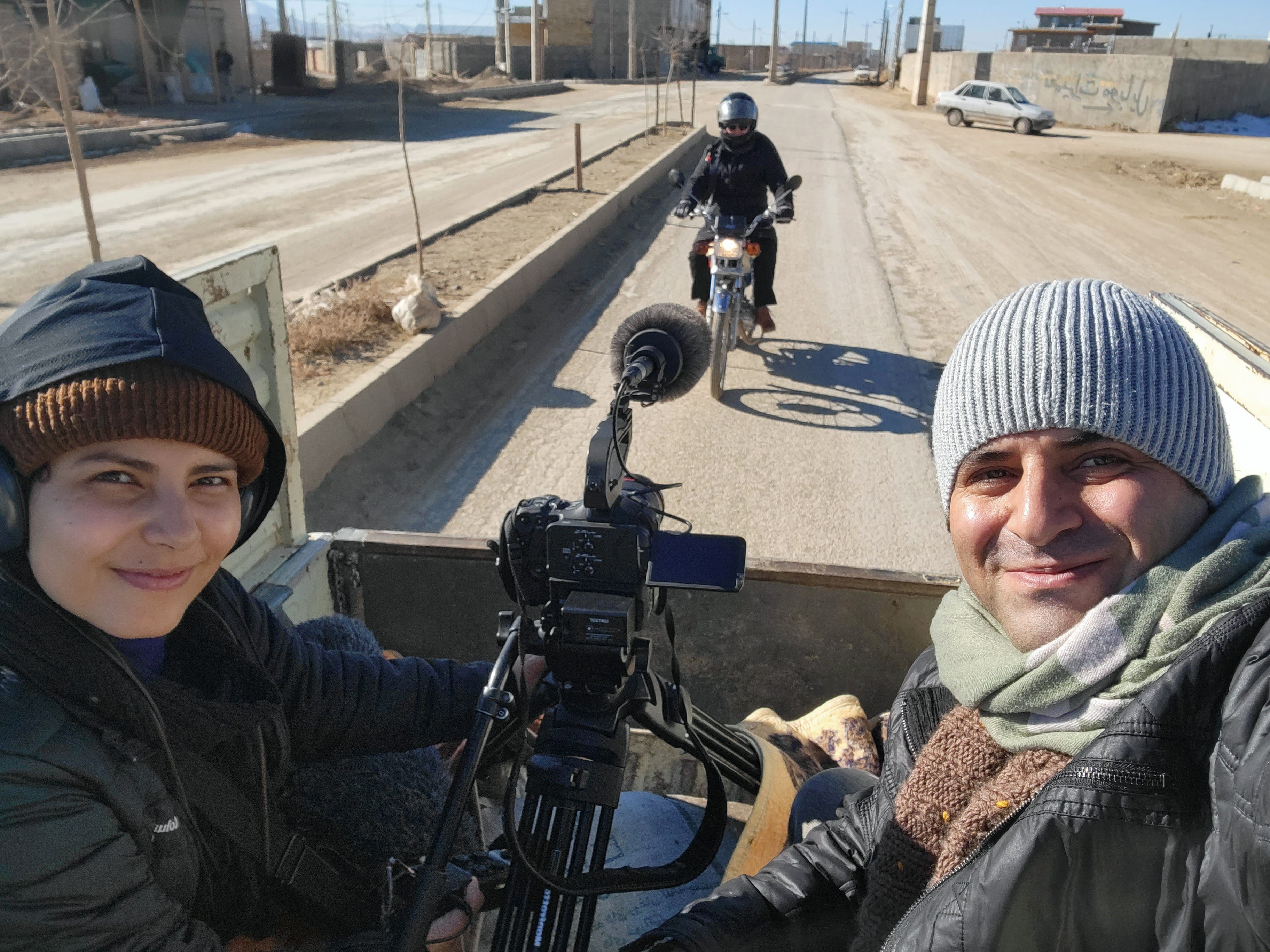
Sara: We spent seven years in production, and over those seven years we had eight shooting periods. Each time we went back, we realized that to have a truly productive production trip we had to spend substantial time—sometimes a full month, sometimes two months. The longest we spent was 90 days, because we wanted to be on the ground and really follow the evolution of the characters and the events unfolding.
Sometimes Sara, as a council member, would start some construction projects and then we would leave; later on the phone she’d say, “That project is completely finished; now I’m on this other thing.” And we would feel we really wanted to see the difference between the process and the result. I’m sure all documentary filmmakers love seeing process and how things shift.
So that required a lot of patience. And as I mentioned, more themes started to appear. At first, we were only following Sara Shahverdi, and then we realized there was a story about child marriage and education that we wanted to integrate into the story — that’s when we began following younger girls.
There were many instances where young girls would come and spend time with Sara, often in transition—some going through divorce, some returning to school and starting over.
As we were filming, one of these girls was Fereshte, who was on the verge of divorce. Her parents agreed that she could spend some time with Sara, which was really great, because she got a lot of inspiration—especially when they had a moment to go motorcycle riding together.
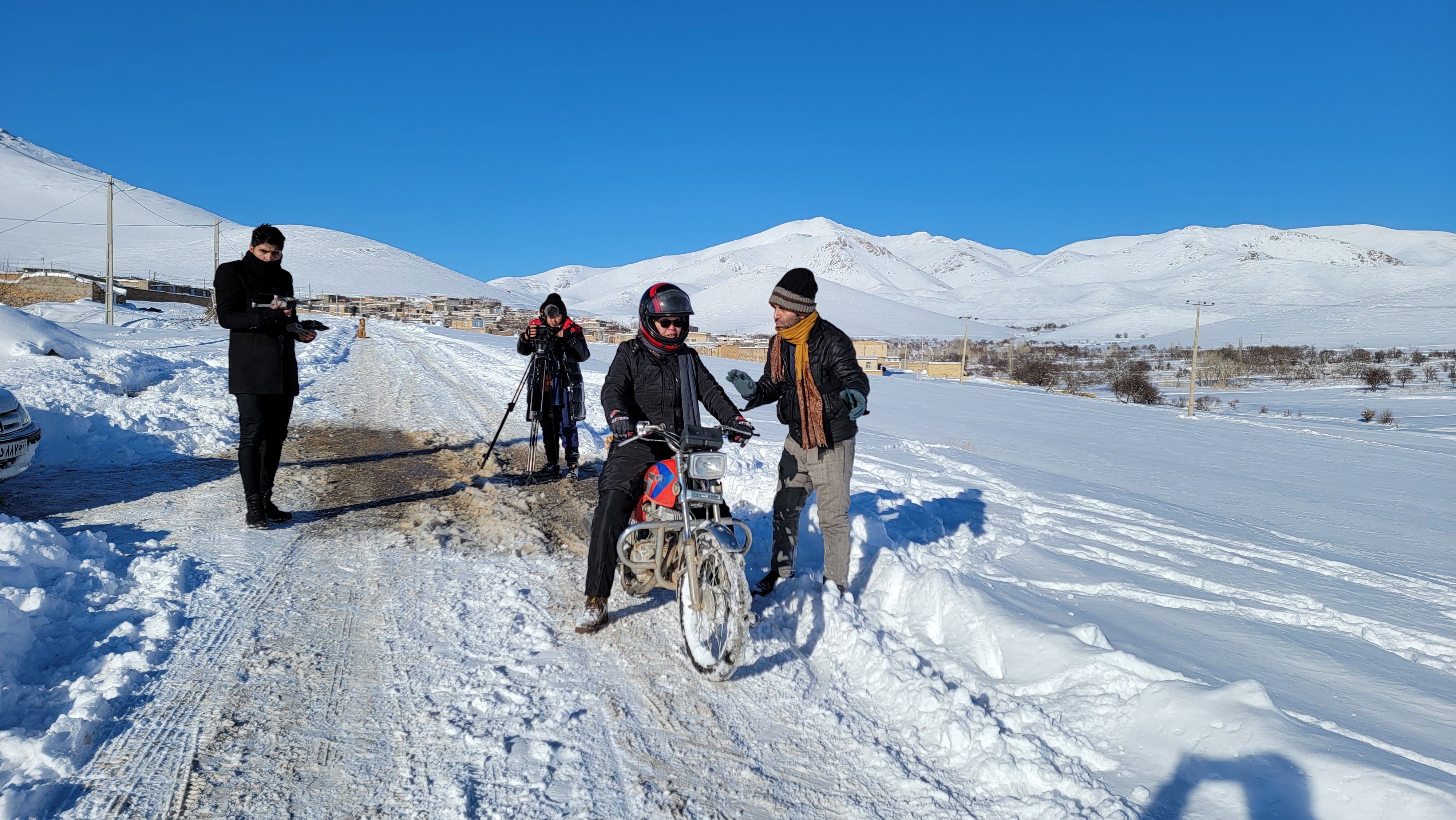
Sometimes we would plan things if we could, but many times events just happened and we had to adapt. For example, they decided to go for this motorcycle ride after a conversation. Later that evening we talked about how we wanted to plan the shoot if it actually happened. Then we spent an entire evening with Sara and Fereshte on the motorcycle, and we went along with them.
I was constantly doing sound; we’re a very small crew, so I was doing sound and Mohammadreza was doing camera. Sometimes in bigger events, like the election or the large motorcycle gathering, we hired extra crew members. But when it was just the two of us, we’d talk about how we anticipated certain moments, though many vérité moments happen spontaneously.
As an editor, I really admired some of the decisions Mohammadreza made on the spot as a cinematographer and director. There were moments when there was no time to speak between us, and he would move the camera in a certain way that I later appreciated in the editing room. Other times, we did have conversations—like about the visits to the two trees, which became a motif in the film, or about the gate to Sara’s house, which also became a motif.
But while we were shooting those moments, we weren’t thinking, “This will be an important motif.” They became important motifs as we were editing.
Vanessa: It’s so clear—and you’ve spoken so well about that process with vérité documentary, where you don’t know what will happen and you hope you’re there for key moments. Often you’re called in, but key moments can also happen very quickly, and thankfully you were there on the ground capturing so much.
I honestly could have watched Sara with “nothing happening.” As you say, I could have watched even if she didn’t get elected. It’s so engaging, and it’s so beautiful how you bring in the girls and more characters with depth. But I wonder, because you do have a very dramatic turn of events in the film: these accusations arise against Sara and she’s questioned.
It was surprising—I didn’t expect it, I didn’t see it coming. I wonder how you felt, because you couldn’t have known events would go this way or how Sara would respond. You end up with a very dramatic story that says even more than you might have anticipated going in. How did you manage that? You mentioned, Mohammadreza, that the townspeople were very comfortable speaking up and giving their opinions if they didn’t agree with her—but it becomes very dramatic.
Mohammadreza: We always mention that we learned a lesson from Abbas Kiarostami, an Iranian director we admire. He says that for making films, you don’t need to invent something—you just need to be a good observer. To make dramatic films, you don’t need to create something surreal; many times life is full of drama.
Imagine, Vanessa, if someone wanted to make a film about you over the last eight years—I’m sure your life would be full of dramas, details, and small everyday challenges. The filmmaker is there to explore those moments. We wanted to spend a lot of time and be patient there, to be good observers and to explore, so we wouldn’t miss something important happening that should be included in the film.
We wanted to observe Sara and her community and include all those perspectives. This was a very complex story with many layers, and we decided to use and include those layers by making a cohesive film, while also knowing it is a global story that should be understandable everywhere. Now we are in New York and our colleagues and friends say, “Guys, Cutting Through Rocks is our story too here in the US.” The challenges we show in this story from northwest Iran are challenges you can find here in New York as well.
So we wanted to stay sharp making this film and just be good observers. The dramas were already there, waiting for us to explore. One of those layers—Sara’s gender “crisis” in the film—was shocking. We didn’t expect it. But the underlying idea was familiar, because it was about power: authority saying, “We have control over you. If you want to be strong, it’s better to be a man; being a strong woman doesn’t go together.”
Sara: And the body policing —the body policing that happens everywhere. As women, we become aware of that regardless of where we live; it becomes part of our collective consciousness. To see it happen in such a dramatic way to her was really shocking, and she was equally surprised.
Their aim, as you mentioned, was really manipulation of power—holding on to the idea that they didn’t want her to continue her activities. They stopped her from working for well over a year while the case was ongoing and she had to go through a series of tests. Then, as rapidly as the case was opened, they closed it without explanation.
Basically, the result was what she explains in the film: “They closed the case, but who is going to heal my pain now?” We see a lot of that in these kinds of societies.
We, as independent filmmakers, were also stopped and questioned and banned from leaving Iran for a full year. During that time, we were in the middle of production and trying to figure out—based on the footage we had—whether, if we only had one more shooting trip, we could finish the film and what that would look like.
Because it’s a vérité film, we were left with a lot of uncertainties and questions. But we had to keep going with belief and faith that somehow, magically, they would close the case and we would be able to go back and continue.
And it happened. They closed the case and we went back to filming. Because of what happened to Sara Shahverdi and to us, we often say Cutting Through Rocks mirrored both the production and the person we were following. It was a mirrored journey, and it made us even more determined to tell this story.
Vanessa: And you actually did something I think is really important in your choice to continue and in your choice of where to end the film—because that was completely open and in your hands.
It’s so moving how inspiring Sara becomes to the girls in the film: for the crisis that comes to her to diminish not only her opportunity and progress on the council, but to put fear into other girls and women about gender and power—“you’re not meant to be in these positions, this isn’t for you”—it’s powerful to feel and see her resilience in moving beyond that so she remains an inspiration and force.
I thought that was a brilliant choice and so important—that you kept going. How did you find that ending?
Mohammadreza: The ending was there, and we decided to trust our intuition while working on this film. As we mentioned, we had eight sessions of filming and each one involved many long days in the village. Each time we thought, “This is the last phase of production,” but after encountering new layers and stories we felt we needed more time, another round, another production period in the field.
We wanted to see the changes Sara was offering to the community—the evolution. We wanted to see how complex the story was and how Sara was fighting on many fronts for one reason: bringing equality to the village.
When we experienced what became the last shot of the film, we realized that, at the beginning, Sara was the only motorcycle rider in the village, and then we see the fruition of her work: other girls joining her, and parents who were against these ideas in the beginning now coming to support their daughters. Other villagers watch them as well, and some of those girls now attend university, and the first girls’ high school is being built in the village.
It’s not only about this village—people from other villages are watching and thinking about other ways of living and supporting their girls. When we witnessed this change, we understood it wasn’t about changing everyone in one moment. It’s about the future and the possibility of a better future.
Recently someone asked what the most important thing Sara did in the village was—construction, education, motorcycle riding, or being the first woman to take a council seat. Our answer was no; the most important thing was changing people’s perception in the village. And she did it. Now you can find more teenage girls daring to ask for their own rights.
Vanessa: It’s epic, really. It’s epic, the film. It’s intimate, but it truly feels epic. I’m so excited that you’ve made it and that it’s out there and can have this ongoing effect.
I wonder if, on the Oscar campaign trail or the festival circuit, you’re experiencing audience reactions in this particular moment in time. As you’ve said, your story connects to women everywhere. Women in the US right now are experiencing backlash around our rights. I wonder how you see it as Iran is having a moment of global attention. How is this connecting for you on a bigger scale?
Sara: Yes. After the film had its world premiere at Sundance, it was wonderful to see it travel to now over 100 film festivals worldwide, and we receive many beautiful messages from audiences. This is such an important experience for any filmmaker—to connect to the audience.
We don’t have a US distribution deal, but in some ways, not having US distribution has connected us more deeply to audiences, because we get to be in theaters and cinemas, see them in person, and hear their reactions.
Mohammadreza: And learn from them.Yes, we learn from them, because they start sharing their own stories and experiences. For us as filmmakers, this is very important and meaningful.
Sara: Some say, “This is our story too—Sara is now our new role model.” We have some updates to share with you about Sara back home, because in some ways we are deeply sad that we aren’t able to celebrate with her. We can’t have Sara Shahverdi on the ground for the Oscars because of the travel ban. There are many limitations on what is happening back home versus here in the US.
But we worked very hard on various documents to be able to have her in Europe at least, to enjoy festival experiences. One festival she was able to attend with us was in South Korea—the only place she has been able to join us so far.
She experienced the film with young South Korean teenagers, and after the screening they came to her, asked for her signature, and shared that—even though they clearly have more educational rights and can choose whom to marry—there are many injustices in South Korea we weren’t aware of. That was very interesting. They said we all need someone like Sara Shahverdi in our communities to help us move forward.
Mohammadreza: And Sara’s answer was, “You are all Sara Shahverdis for your communities.” And that’s true, because if we give them more space, they can really shine. I’m from the community where Cutting Through Rocks takes place, so I’m sure if we give teenage girls more space, they can do so much—we could have many more Sara Shahverdis. Her dad gave her that space, and now she is someone trying to empower others.
Regarding what’s happening in Iran now—the very tragic events—it’s unbelievable. It takes weeks just to digest the news. That’s how all Iranians feel, inside and outside the country, because it was so shocking.
The only thing that gives us hope for the future of our country is our people—people like Sara. We have many amazing men and women living in Iran now. This is one story from northwest Iran, but there are other incredible people across the country, and they deserve a better future.
Sara: In the end, I would say this is also a story of perseverance, hope, and tenacity, and we hope audiences walk away feeling those things for their own lives and communities. We certainly hope all the amazing qualities Sara has can exist for others inside Iran as well.
Vanessa: I love that. It really is such a beautiful story of Sara and the community. You’re so aware of everyone around her, and she wants to take care of everyone around her and help the community.
I’m so sorry our US cinema ecosystem is where it is, that distribution isn’t already there. You should be offered wonderful deals, and it should be obvious that this film belongs in theaters for long runs and available on streaming.
This is something Ted, my husband, whom I’m doing these with, is working on every day—trying to build the film community and push for films like yours to be seen and for filmmakers like you to be heard.
I don’t know if, in your journey, you’ve come up with any thoughts on what we can do better or how to improve the cinema ecosystem?
Mohammadreza: We’re here because of support from colleagues like you. We didn’t have any distributor, and it was amazing—it was exactly like Sara Shahverdi’s grassroots campaign: Cutting Through Rocks.
For us, too, it was cutting through rocks. We wanted to do it because we believed this is a story that needs to connect with audiences in different places. Now we are here because people believe in the story, and because colleagues generously supported us and the film by spreading the word and encouraging others to watch it. We never take that for granted.
Sara: I also wanted to add that, in terms of what I wish for the industry, it’s a bit more inclusivity and, at the same time, sustainability. We spent about eight years of our lives telling this story, and we are working so hard to find a home for it—when it shouldn’t be that way.
Yes, through support from colleagues we’ve been able to bring attention to the film, which is great, but we are also releasing the film theatrically, independently, with a very small team. That’s been good, but we wish there was another platform where we could have both a theatrical release and the opportunity to connect with audiences without necessarily…
We love the independence with which we made the film. But I feel now there are specific streamers and platforms that dictate a certain way of storytelling, and in that sense we are being excluded from those categories.
At the same time, it might be inspiring for the next generation of filmmakers to see Cutting Through Rocks as its own model: independently made, independently released, and now independently nominated. It’s a wonderful model in one way, but it’s not sustainable. We really need to find a way to bridge this gap—finding a platform.
Vanessa: Well said, I completely agree. I share your experiences. I spent eight years making a documentary too, so I very much understand the multiple trips, the commitment, and the cutting through rocks. In today’s world we really need movies like yours.
I’m so thankful you’ve made this film. I’m so grateful for your time today.
Mohammadreza: Thank you so much. It was really amazing talking to you.
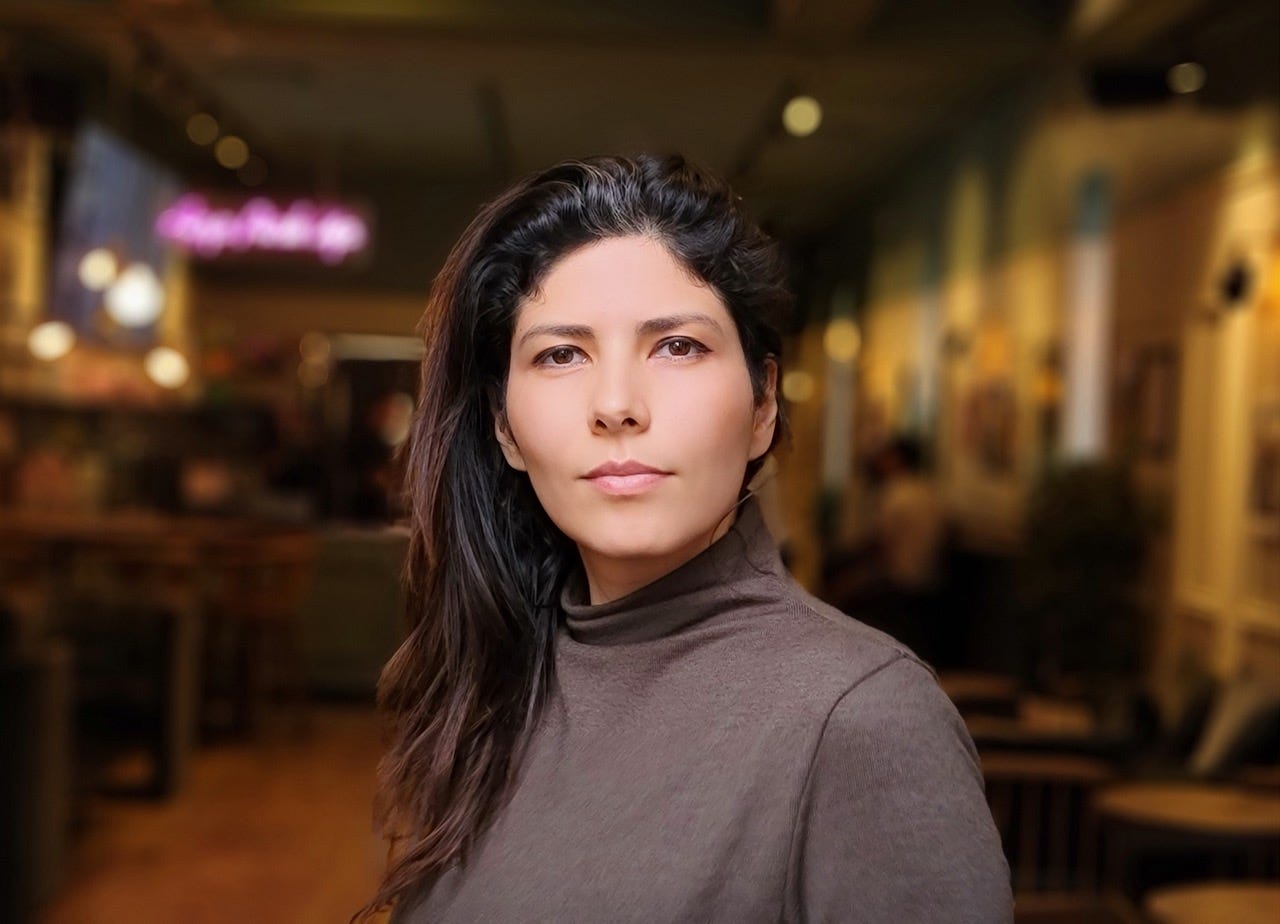
SARA KHAKI Director, Producer, Editor Sara Khaki is a documentary director, producer and editor dedicated to telling stories that promote gender equity. She is a Sundance Film Festival Grand Jury Award winner (World Cinema Documentary) and Visions Du Reél Audience Award winner for her feature documentary Cutting Through Rocks, which follows the first elected councilwoman of a rural Iranian village. The film has been called “a deftly shaped work of cinematic nonfiction” by IndieWire and “one of those profound vérité documentaries that are only possible through the patience and perseverance of the filmmakers” by POV Magazine. Sara’s short film Our Iranian Lockdown (2020) is now streaming on The Guardian and received an IDA Awards nomination. Her co-directed Netflix Original Convergence: Courage in a Crisis (2021) was nominated for an Emmy for Outstanding Current Affairs Film. Sara graduated from the University of Maryland with a BFA in cinematic arts and from New York’s School of Visual Arts with an MFA in social documentary filmmaking. A grantee of the Sundance Film Institute, Chicken & Egg Films and Firelight Media, her work continues to amplify change on gender equity through the cinéma vérité form.
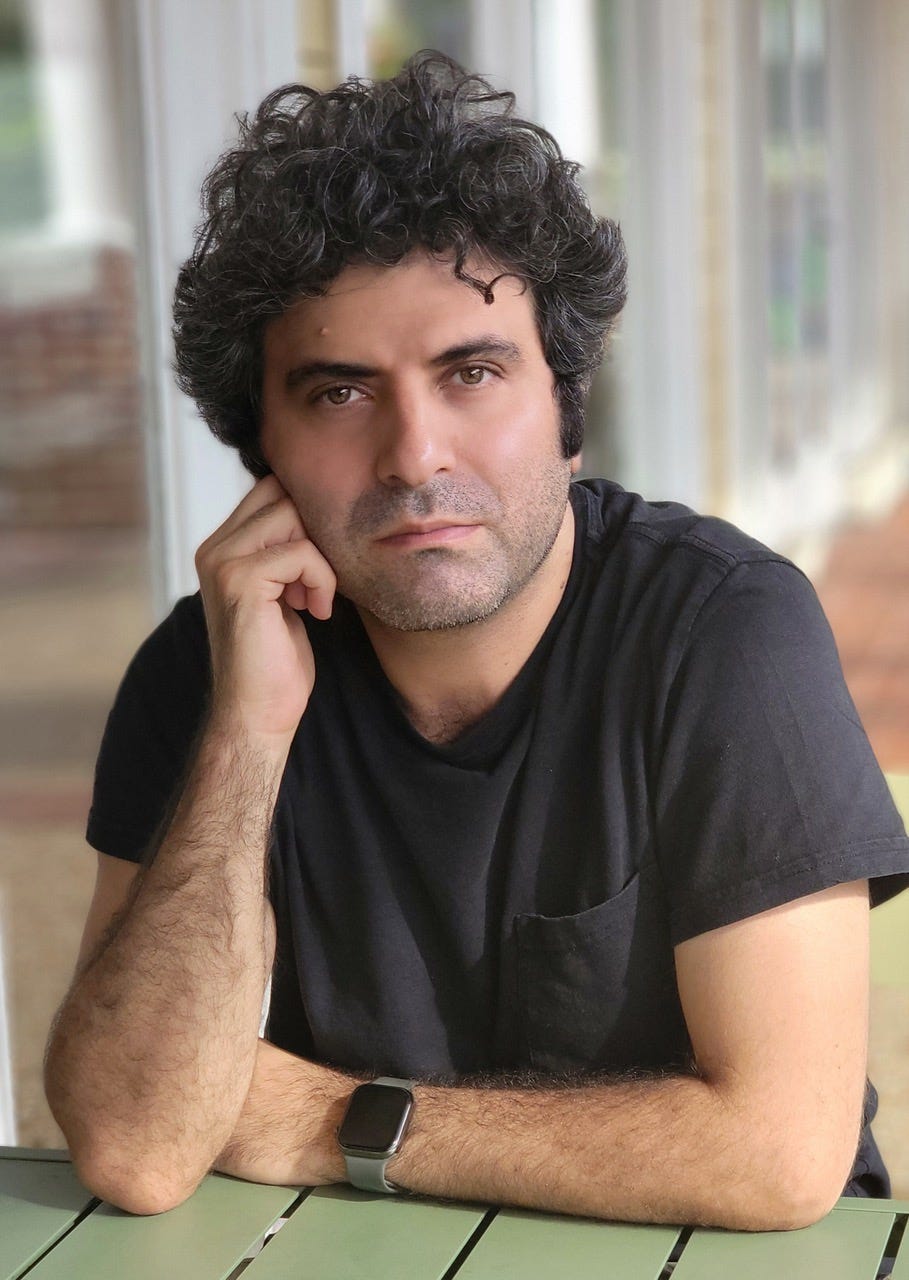
MOHAMMADREZA EYNI Director, Producer, Director of Cinematography, Editor Mohammadreza Eyni is a director, producer and cinematographer whose career and cinematic approach aims to bridge boundaries, elevate underrepresented voices and connect diverse perspectives globally. He is a 2025 Sundance Film Festival Grand Jury Award winner in the World Cinema Documentary competition for his feature documentary Cutting Through Rocks, which has become an audience favorite at Sydney, Hot Docs and the Visions Du Reél film festivals, among others. His cinematic approach has been heralded as “uniquely propulsive”and “practically magical” (Variety) and “precisely lensed” (IndieWire) as well as “delivering simple moments into cinematic poetry” (Hammer to Nail). He was named by Pure Nonfiction as one of the top five cinematographers to watch at Sundance in 2025. Mohammadreza’s intimate short film Our Iranian Lockdown, streaming on The Guardian, received an IDA Awards nomination. His co-directed Netflix Original Convergence: Courage in a Crisis was nominated for an Emmy for Outstanding Current Affairs Film. Mohammadreza has been supported by Sundance Institute, IDFA Bertha Foundation and Hot Docs Cross Current Doc Fund, among others. He is a Tribeca Film Institute alumnus and graduated with an MFA in cinema from Tehran University of Fine Arts.


