
Four Generations, Three Chinas, One Taiwan: My Family’s War Story and the Boomerang of Authoritarianism
My grandfather flew unarmed into Japanese‑held China; last week I screened a film about Taiwan’s democracy in the U.S. Capitol. Why the arc between those moments still falls short of freedom for all.

Saturday, June 6th was the anniversary of D‑Day, the beginning of the Allied push that broke Nazi power in Europe. The images we remember are of beaches and bunkers and young men wading into surf under fire. My grandfather wasn’t in Normandy; he was in China, working in a secret rescue and intelligence organization under the War Department, doing the shadow work of war half a world away. Secret work for a secret service meant secret from the family too, so this personal history only came to me recently once it was declassified. Thankfully, I was able to learn about it because of my own work in China and Taiwan and could share it with my father before he died in 2021. And when my father died, I was given over thirty albums of his father’s life and travels around the world. I stored them, as he had done, without looking closely—until last week, when an assignment forced me to open them. What I found astonished me.
My grandfather, Winston Frederick Churchill Guest, was in many ways a perfect symbol of the world that was passing even as the war reshaped it. Born in London, he carried Spencer‑Churchill lineage on the British side; on the American side, his mother came from the Carnegie–Phipps steel fortune, and he married Helena Woolworth McCann, heir to an industrial‑era retail empire. Together, those worlds made them a kind of transatlantic aristocracy, at home on Fifth Avenue, in Palm Beach, and in country houses from Long Island to England. Before the war he was captain of the U.S. national polo team, a nine‑goal player who won the U.S. Open three times and the Argentine Open, represented the United States against England, Argentina, and Mexico, and played international polo in Britain, India, China, and beyond. He became the first indoor player ever to earn a 10‑goal handicap and was later inducted into the Polo Hall of Fame for a career that took him from Long Island fields to Buenos Aires and back.
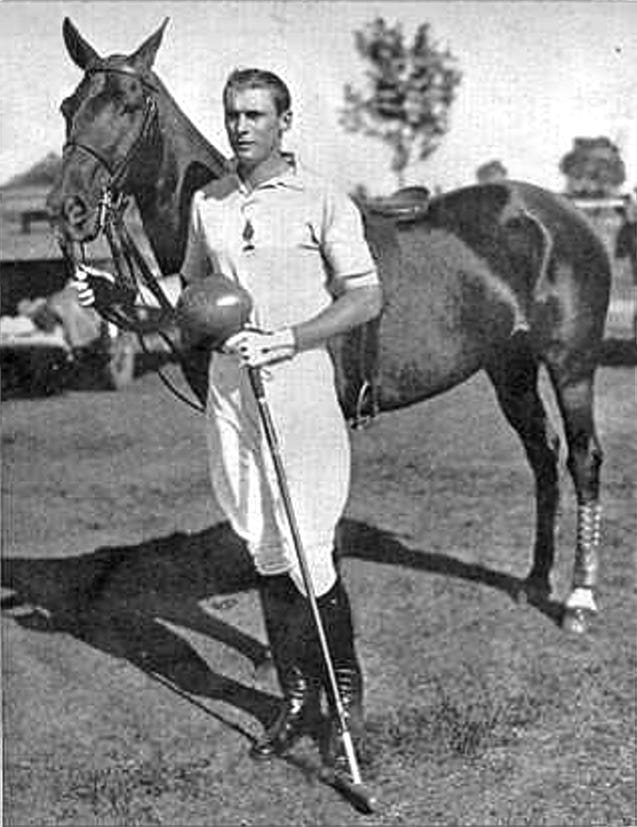
In the 1930s, I just discovered in their photo albums that he and my grandmother traveled to China as part of a round‑the‑world tour that, for him, also meant polo, an imperial sport carried into a republican China ruled by the Kuomintang, already cracking under the pressures of warlords, Japanese aggression, and nascent revolution. He arrived as a guest of an unequal world: foreign enclaves, treaty ports, a country not yet free, its sovereignty bartered and fragmented, exactly the kind of layered, morally ambiguous history that filmmakers like me end up circling back to, again and again, with a camera in hand.
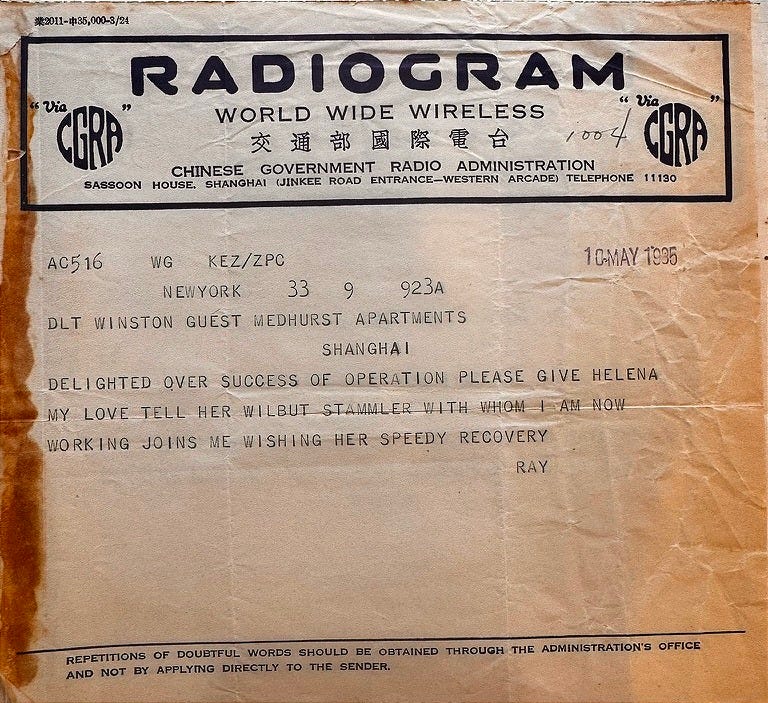
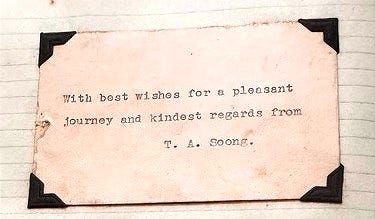
On one of those prewar trips, he and my grandmother, newly married and still in the honeymoon phase, passed through Shanghai, the nervous system of Nationalist China’s financial and political life. They moved for a moment inside the orbit of T.V. Soong, the Harvard‑educated financier sometimes described as the richest man in China, brother to the three Soong sisters, one of whom married Sun Yat‑sen and another Chiang Kai‑shek. The Soongs sat at the center of a triangle of money, nationalism, and religion that bound Shanghai’s treaty‑port capitalism to wartime Washington. My grandparents circulated through drawing rooms and consular compounds where foreign officers, Kuomintang grandees, and Shanghai tycoons traded gossip about war and markets in the same breath. To them it was a glamorous detour; to me, looking back, it is a glimpse of how thoroughly American privilege was braided into the fortunes of a Chinese ruling family that helped build a modern state while cutting deals with imperial powers.
Long before I knew any of this, I had already lived inside that world in my imagination. As a teenager in 1987, I watched Empire of the Sun and identified completely with Christian Bale’s character: a privileged child in pre‑war Shanghai, suddenly plunged into a Japanese internment camp, trying to make sense of adult madness. Only a few years ago did I learn that the real‑world counterpart to those camp liberations, the unarmed American planes landing in Japanese‑held China, the negotiations to free civilian prisoners, was the mission my grandfather flew into Canton with the Air‑Ground Aid Section (AGAS) at the end of the war.
By the late 1930s my grandfather had tried, unsuccessfully, to enter U.S. electoral politics, running in 1934 as a Republican candidate for the U.S. Senate from New York. When war came, he was over the draft age but volunteered anyway. In 1944 he took a Marine Corps commission, went through Parris Island and Quantico, and soon slipped sideways from the track of a conventional junior officer at a Pacific air depot into something far stranger: a top‑secret rescue and intelligence mission that would send him back to China.

The unit was called the Air‑Ground Aid Section (AGAS), an innocuous name for a small, secret War Department office tasked with rescuing downed airmen and prisoners of war across China and French Indochina. From 1943 to 1945, AGAS ran networks hundreds of miles behind Japanese lines, built clandestine airstrips by hand in villages that had never seen a machine, and worked with both Nationalist and Communist forces to pull American airmen, British civilians, and other Allied prisoners out from under the nose of the Japanese. It was the sole U.S. ground force operating deep in the Chinese interior, a pioneer of modern U.S. special operations, and it disappeared almost completely from public memory after the war, buried under classification and Cold War politics.
Winston enters that story at its most dramatic moment. In August 1945, as Japan capitulated, AGAS was ordered to reach Japanese‑run prison camps in Shanghai, Canton, and other cities before the guards could kill their captives or use them as bargaining chips. Winston, now a Marine lieutenant, was assigned to co‑lead the mission to Canton with Lieutenant Colonel Lindsey Ride, the legendary Australian doctor who had escaped a Hong Kong camp, built the British Army Aid Group, and spent years organizing escapes and intelligence networks under the Japanese. Ride was older, more senior, and deeply rooted in Hong Kong and South China; he did not relish sharing command with a glamorous polo‑playing cousin of Winston Churchill from New York.
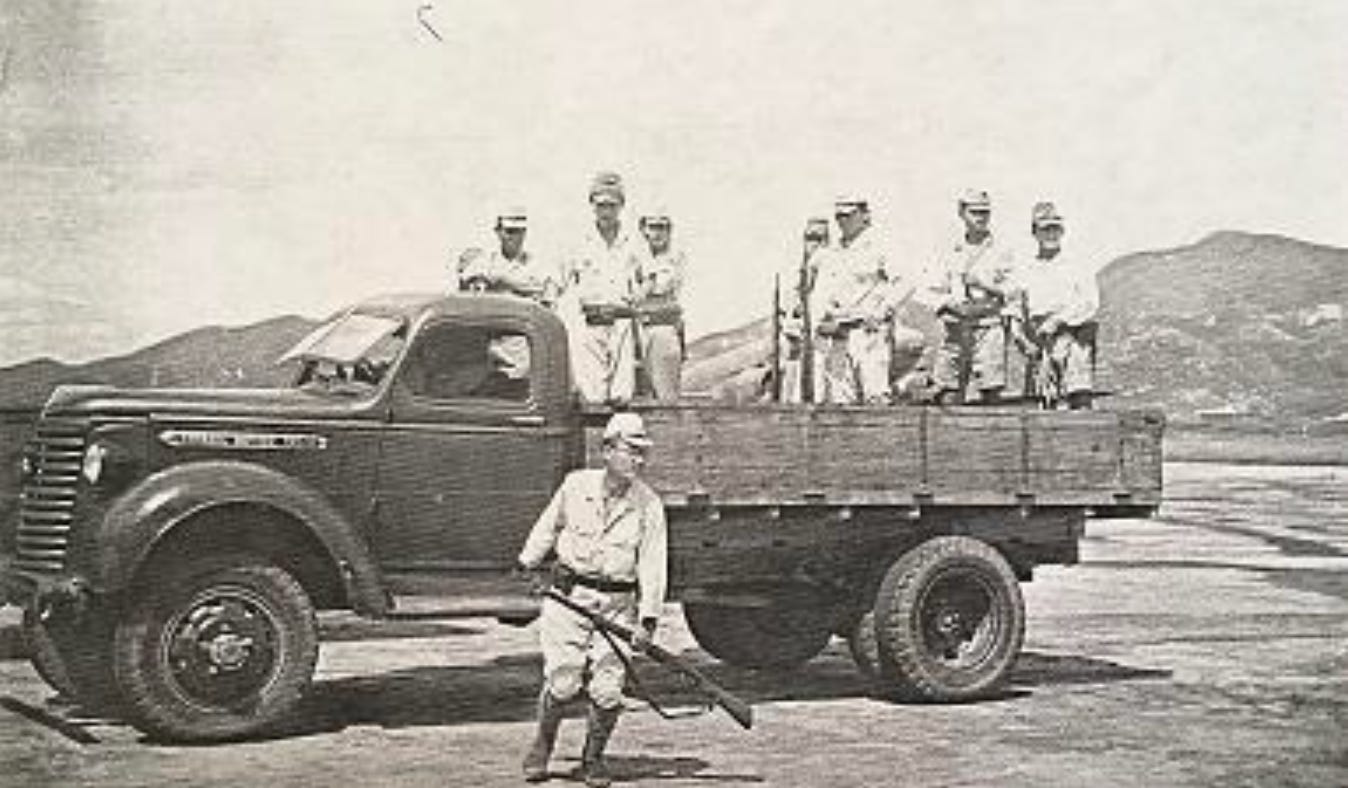
Together they flew into Canton in an unarmed DC‑3 transport, deliberately without fighter escort, to signal that they were on a mission of mercy. The Japanese had laid a hidden explosive trap at the end of the runway; by chance or skill, Winston’s plane missed it by feet. As they taxied in, trucks pulled up and Japanese soldiers jumped off to surround the party on the tarmac. A period photograph shows Winston, the tallest man in the group, standing next to Ride in his beret, encircled by armed Japanese troops. The Japanese commanders quickly grasped the split between their British and American counterparts and tried to exploit it, offering different terms and hinting at danger if the Allies insisted on moving too fast. The first mission failed: Ride and Winston left Canton without securing the camps.
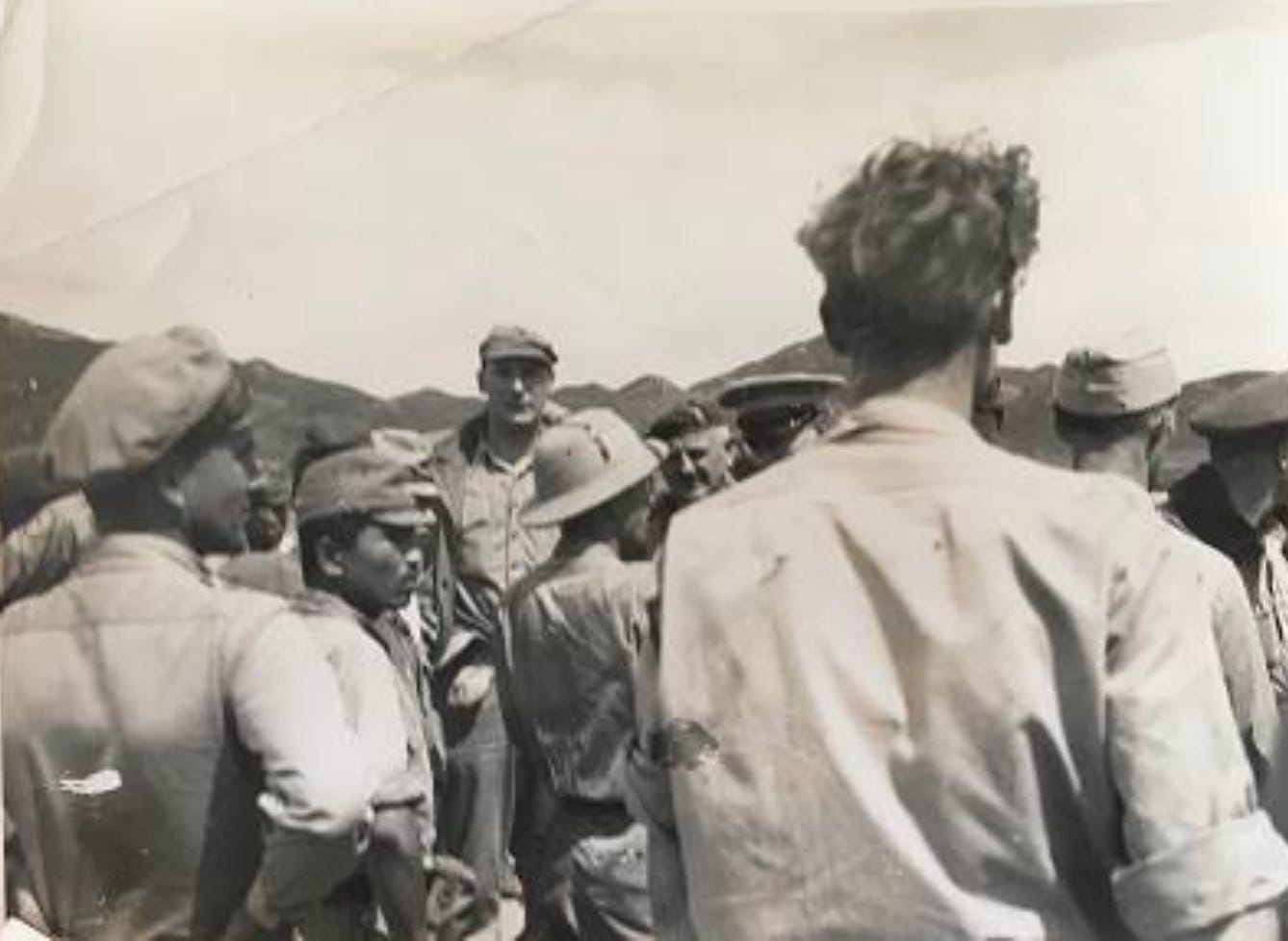
The next day, Winston returned without Ride, leading an all‑American AGAS team. This time he negotiated directly with the Japanese and obtained their agreement to surrender the camps and turn over the prisoners unharmed. British civilians in Canton were liberated by an American‑commanded mission in what had once been a British sphere of influence, under the guns of a Japanese army that had humiliated Britain at Hong Kong and Singapore. A Churchill cousin, wearing U.S. Marine insignia, stood at the hinge point between a collapsing empire and a rising one, and then flew home.
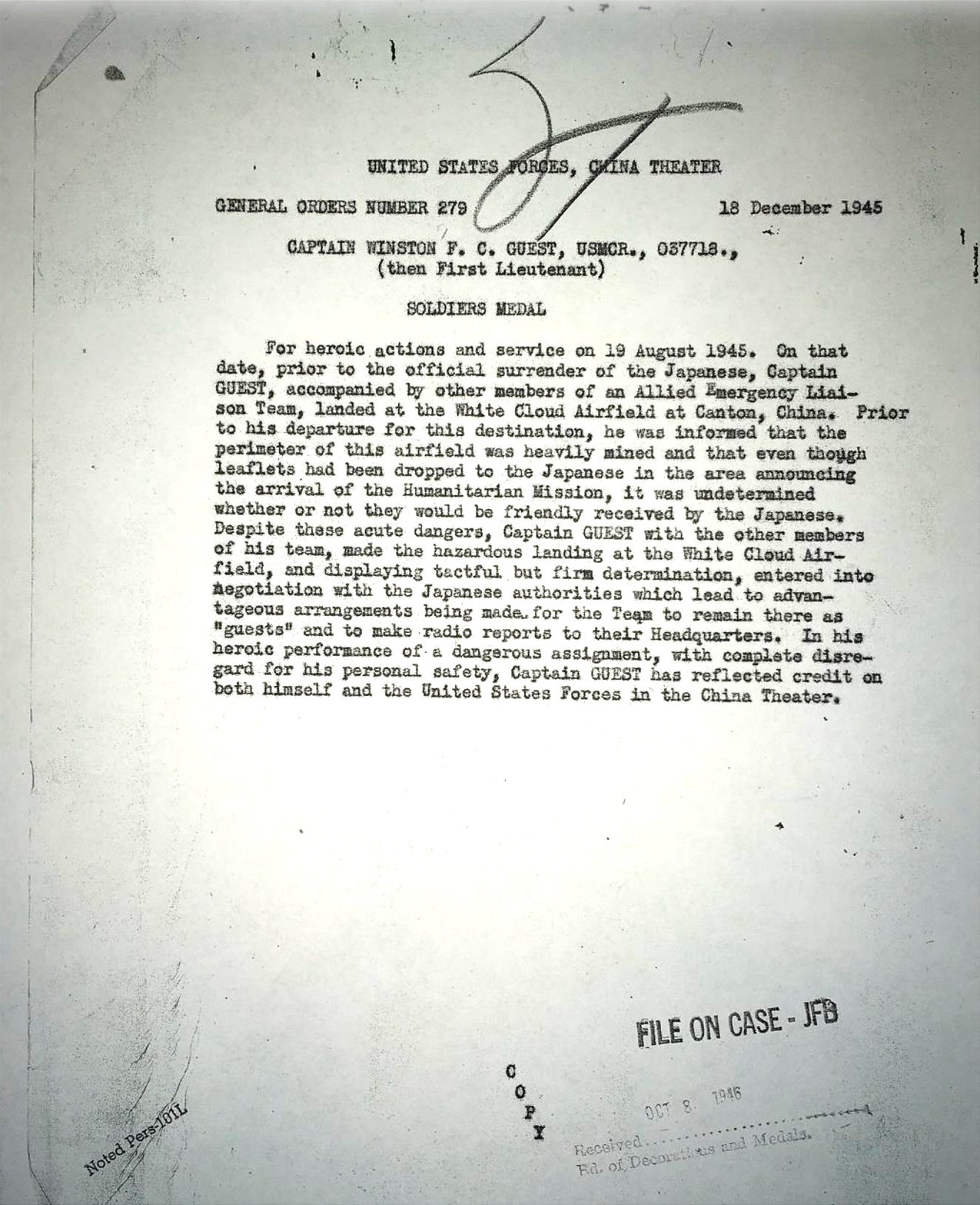
After brief duty in Shanghai helping AGAS care for more than 7,000 liberated Allied civilians, Winston returned to the United States, received the Soldier’s Medal for heroism in non‑combat operations, and requested release from active duty. Within a few months he was back on the Upper East Side, on Long Island and in Palm Beach, back to polo and board seats and aviation ventures in Mexico, his role in one of the most successful rescue operations in U.S. military history effectively erased from view. AGAS itself remained classified for decades; its veterans obeyed their orders and kept their secrets. A man who had helped persuade a Japanese garrison to surrender a prison camp in southern China became, again, a private citizen in a world he had helped to reorder.
I first went to China at eighteen, in 1991, knowing none of my grandfather’s history there. I was drawn instead by my East Asian history class, the first of its kind introduced at my school the year before I graduated. I felt late to the study of China and Chinese, and immediately wanted to go, a copy of Maxine Hong Kingston’s The Woman Warrior in hand. The blood and broken dreams of the Tiananmen massacre were only two years old when I arrived in Beijing, still fresh in the stories whispered in dorm rooms and on night trains. Officially, the line was stability and prosperity; unofficially, you could feel the dissonance. So many of the people I met wanted the same things my friends growing up in New York City wanted: more freedom, less corruption, a chance to breathe without watching every word. Instead, they got a slower, more patient version of the same thing my grandfather had seen in wartime China from the other side of the gun: a ruling party that would not let go of power, money, or control.
Back then, the United States felt more democratic, (or at least more aspirationally democratic), than it does today. It was already unequal, already compromised, but there was still a sense, however naive, that the arc could bend toward justice: more rights, more inclusion, more accountability. We told ourselves that by welcoming China into the global economy, encouraging “reform and opening,” we would help midwife a softer landing for authoritarianism there, while our own democracy continued to deepen here.
Thirty‑plus years later, my nephew is preparing to go to China at thirteen. He will move through a country where digital surveillance is routine, where the party‑state’s presence is ambient, where the leadership has made clear that economic modernity and political monopoly can coexist indefinitely. He will see a place that is neither the fragile republic of my grandfather’s youth nor the post‑Tiananmen liminality of my first trip. It is something more settled, and thus more chilling: an authoritarianism that has adapted itself to consumerism, technology, and global capital. Will this be discussed on his class trip?
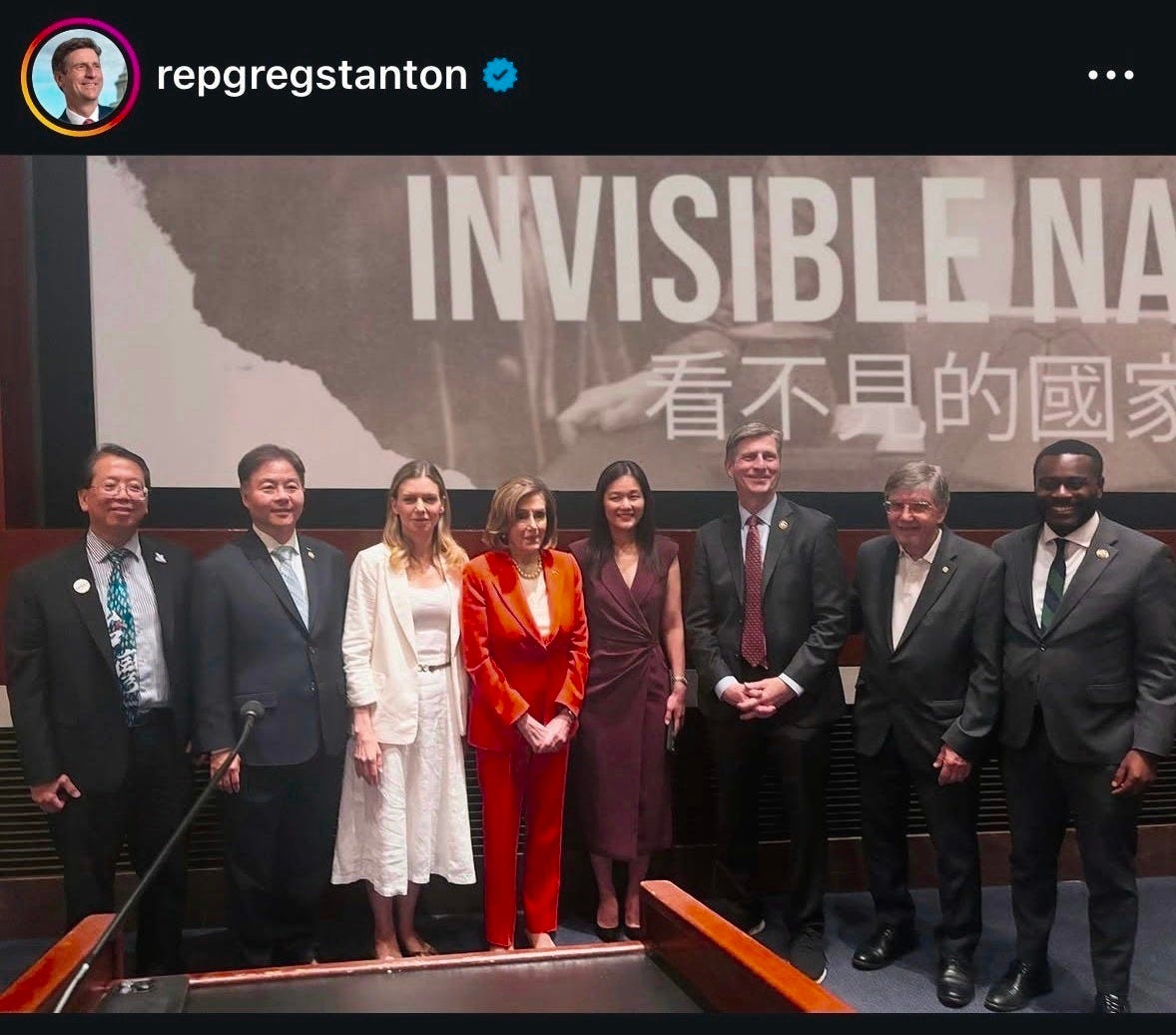
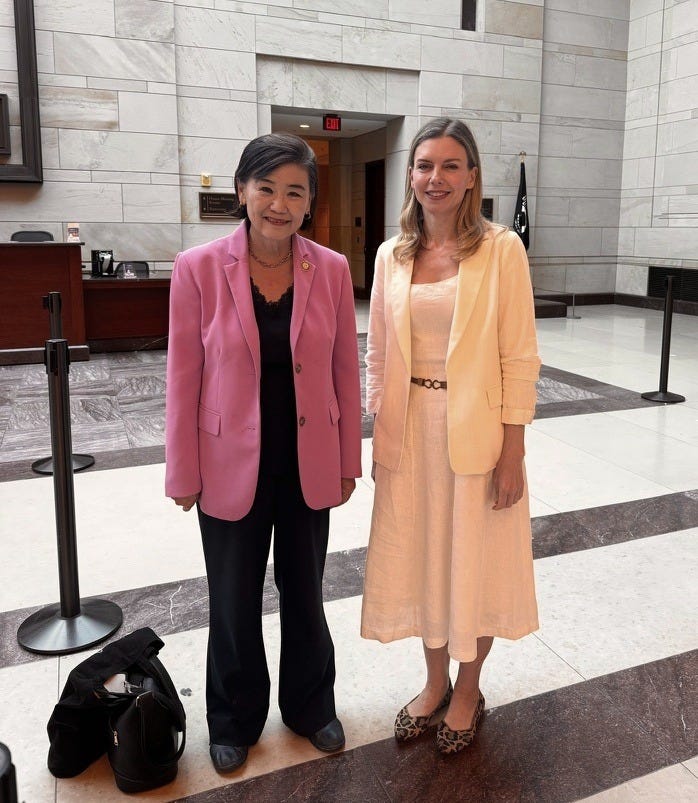
A few days ago, on June 4th, the anniversary of Tiananmen, I found myself in the U.S. Capitol screening Invisible Nation for members of Congress, on the eve of D‑Day’s anniversary, and just after the House had finally passed desperately needed supplemental assistance that included aid for Ukraine and Taiwan. For a filmmaker, it was one of those rare moments when the long, quiet work of production and impact suddenly sits in the same room as the people who write the laws; six Democratic members made it into the room, and ten Republicans who had planned to join us were held back on the floor as leadership twisted arms on the Ukraine vote, a small reminder that even when democracies do the right thing, they do it under strain.
Sharing Taiwan’s story in that building mattered, not because film changes policy overnight, but because Taiwan’s democracy has survived through exactly the kind of cross‑party commitment that has frayed here at home. For decades, Congress has treated Taiwan as a test of whether the United States is willing to stand with a small, self‑governing society in the shadow of an authoritarian giant; the fact that support for Taiwan still draws both Democrats and Republicans into the same room is one of the last, fragile reminders of what bipartisan democratic leadership can look like. Where Madame Chiang once addressed Congress on behalf of an authoritarian “Free China,” we were there on behalf of a self‑governing Taiwan that had thrown off martial law and built a bottom‑up democracy in spite of us.
Historians like John Pomfret and Nancy Bernkopf Tucker have described a deeper problem in U.S. policy toward China and Taiwan. Pomfret shows how, in the 1930s and 1940s, Americans projected enormous hopes onto Chiang Kai‑shek’s regime, imagining it as a Christian‑friendly, quasi‑democratic partner while consistently underestimating its corruption, authoritarianism, and weakness, and underestimating the ruthlessness and appeal of the Communists. Tucker argues that U.S. China policy was shaped by wishful thinking, domestic politics, and the desire to “win” or “lose” China in American terms, rather than a clear‑eyed understanding of Chinese realities. That combination, overinflated expectations, selective blindness, and the need to claim success, set everyone up for disappointment.
The film we showed at the U.S. Capitol last Thursday night is called Invisible Nation for a reason. Taiwan has lived for decades in a kind of enforced diplomatic invisibility, pressured to accept that its people, its leaders, its elections, and even its name must be blurred out to keep more powerful actors comfortable. That logic, those with power deciding who is seen and who is not, runs through more than cross‑strait policy; it is the same logic that keeps women’s leadership marginal, that treats whole communities as afterthoughts, that convinces tech billionaires and party bosses alike that their vision is the only reality that matters.
One of the quiet arguments of Invisible Nation, and of Linda Robinson’s work on women governing under authoritarian pressure, is that who gets to be visible in politics changes what democracy is. Tsai Ing‑wen’s Taiwan is not perfect, but it stands as a reminder that when women and other long‑invisible voices shape the rules, democracies can become more bottom‑up, more attentive to care, equality, and dignity, exactly the qualities authoritarian systems try to suffocate.
This is where the “imperial boomerang” comes in. For decades, the U.S. political and corporate class helped underwrite and normalize China’s rise, not as a democratic experiment but as a lucrative partnership: cheap labor, disciplined workers, centralized decision‑making, and a stable environment for investment. While American companies offshored production and chased China’s growth, communities here were hollowed out, unions weakened, and a generation was told that democracy and globalization were natural partners, even as both Washington and Beijing quietly normalized a world where markets mattered more than people. The Shanghai salons where my grandparents met Soong’s circle were early laboratories for that comfort: American officials and businessmen learning how to rationalize partnerships with a regime that mixed modern finance, family patronage, and one‑party rule, and discovering that it felt, at least in the moment, like pragmatism rather than complicity.
U.S. foreign policy toward Taiwan was made in that same era, when both China and Taiwan were ruled by dictators who had fought a civil war. Washington’s China hands assumed that Chiang Kai-shek’s regime on Taiwan could never retake the mainland (true), and that Beijing would eventually take Taiwan (not yet true, and not inevitable). The Nixon–Kissinger “opening” to China rested on a bargain: sacrifice Taiwan’s position to secure a strategic triangle with Beijing against Moscow and wind down the war in Vietnam, then ride the wave of China’s economic opening for the benefit of American elites and corporations, from Wall Street to Silicon Valley. Tucker’s critique of a policy that put abstract great‑power balance and domestic politics ahead of the lived realities of people in Taiwan and China, still echoes.
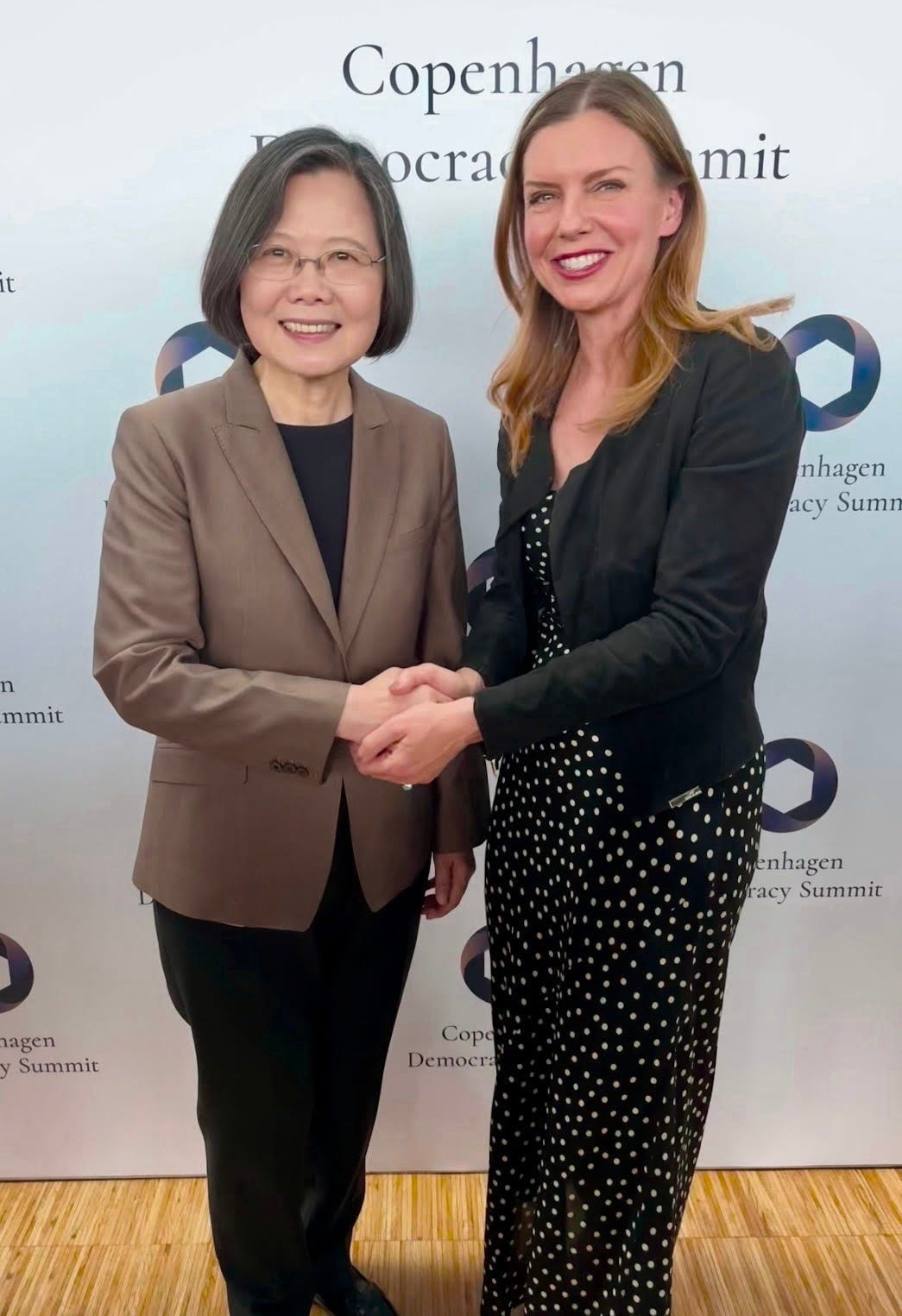
Yet after being diplomatically abandoned by the United States, which had historically recognized Chiang’s Republic of China government on Taiwan first (as had the U.N., where Chiang sat alongside Churchill and Roosevelt as a founding Security Council member), the people of Taiwan did something remarkable. They overcame their own authoritarian dictatorship, the 38‑year period of martial law known as the White Terror, and built a democracy. They did what Washington assumed they could not or would not do. They turned an island once ruled by a generalissimo into a place where a woman law professor could be elected president twice and hand power to another party in a peaceful transfer.
Our authoritarianism is homegrown. It draws on a long domestic history of white supremacy, patriarchy, and anti‑democratic backlash. But it has also been shaped by our comfort doing business with authoritarian regimes, by the habits of empire: managing populations abroad, propping up strongmen when convenient, treating “order” as more important than justice. When you spend generations underwriting other people’s dictatorships, it becomes easier to rationalize the erosion of democracy at home.
So now, when I think about my grandfather in AGAS, my eighteen‑year‑old self on a Beijing street, and my nephew boarding a plane in 2026, the question is no longer just, “What kind of regime is China?” It is, “What kind of regime are we becoming?”
The same United States that once sold itself as the beacon of democracy is now flirting with “strongman” politics, entertaining the idea that a single leader, surrounded by loyalists, can override constitutional limits, purge the civil service, rewrite the rulebook. We are watching a major party align itself with a leader openly hostile to pluralism, the rule of law, and any check on his own power, all while wrapping it in the language of patriotism and faith.
It would be too simple to say that China “caused” this. It didn’t. Our authoritarian turn is the product of decades of rising inequality, racial backlash, disinformation, and the corrosive influence of money in politics. But our engagement with authoritarian regimes abroad has normalized a certain posture: that democracy is optional, that human rights are negotiable, that power’s first duty is to itself.
When I look at my grandfather’s generation now, I see something more complicated than pure heroism. They fought fascism, yes. They helped end a monstrous regime in Europe and defeat a militarist empire in Asia. But they also built a global order that tolerated and often nurtured other forms of authoritarianism, so long as they were friendly to American interests. The institutions they left us are under attack from within, not only by aspiring strongmen but by those who have quietly decided that democracy is inconvenient.
To honor that generation today is not to freeze them in sepia as “the greatest.” It is to learn from both their courage and their blind spots. They believed, at their best, that some things were worth risking everything for: self‑government, human dignity, the idea that power should answer to the people. If we take that seriously, then our task now is not only to critique China’s authoritarianism or to defend Taiwan’s democracy, though both matter profoundly. It is to confront our own drift toward authoritarianism, our own willingness to trade away rights for a feeling of safety, our own temptation to look the other way when power is abused by “our side.”
My grandfather’s war was fought with unarmed DC‑3s flying into hostile airfields, clandestine networks, and negotiations with Japanese generals. My war, our war, is fought with votes, institutions, narratives, and the refusal to normalize cruelty and patriarchy, which my friend and author Anna Malaika Tubbs rightly links to authoritarianism and corruption. When half the population is treated as lesser, it trains societies to accept hierarchy, silence dissent, and excuse abuse of power; when women lead as equals, they expand whose freedom counts and what democracy protects. My nephew will inherit the outcome of both.
If there is any way to honor the men and women who risked their lives in 1944, and the clandestine work done in places like wartime China, it is to build a democracy sturdy enough to survive the temptations they themselves could not fully escape: the allure of empire, the seduction of “order,” the belief that some lives count less than others. Remembering D‑Day is not enough. We have to fight, again, against the new forms of authoritarianism, over there, yes, but also, and especially, here. Telling the story of President Tsai Ing‑wen and Taiwan’s citizens in Invisible Nation in places like the U.S. Capitol is one small part of that work. The rest is up to all of us: deciding whose experiences become visible, whose voices are amplified, and what futures we help audiences imagine as possible.